Provide high-quality products and excellent services to customers around the world.

-
PRODUCT
-

PRODUCT
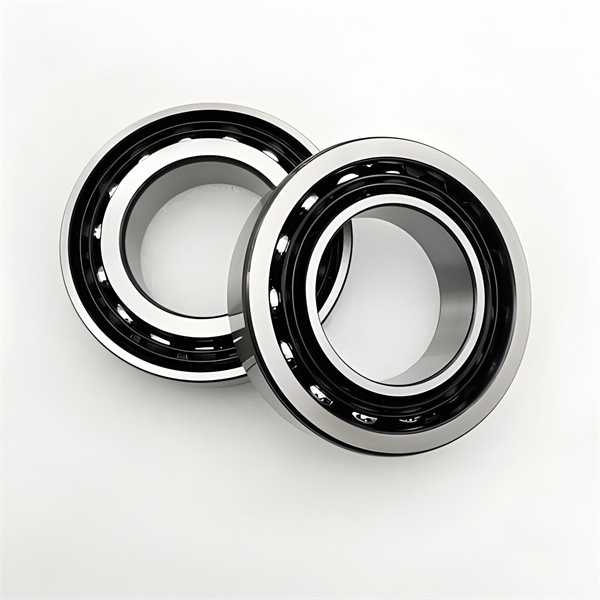
Single Row Angular Contact Ball Bearings
Single row angular contact ball bearings can only support axial loads in one direction. This type of bearing usually requires adjustment relative to another bearing. Its bearing ring has two shoulders, high and low, and cannot be separated.
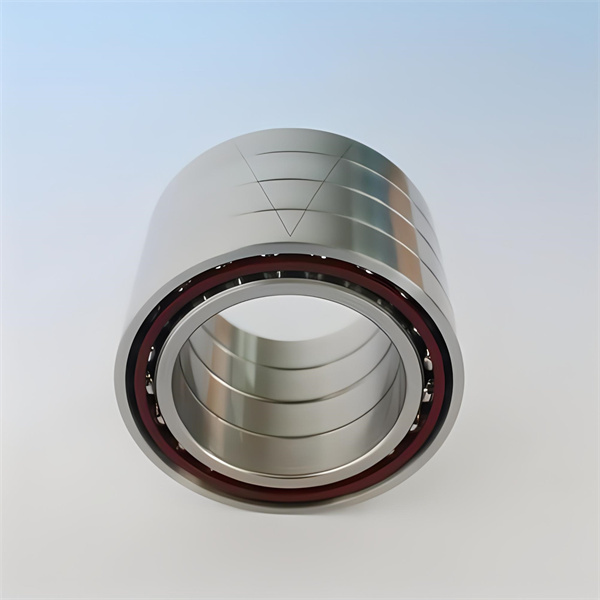
Angular contact ball bearings arranged in pairs
Advantages of paired installation: If it is installed in pairs, the outer rings of a pair of bearings are opposite to each other, that is, the wide end faces the wide end face, and the narrow end faces the narrow end face. This avoids causing additional axial forces and confines the shaft or housing to the axial play in both directions. Because the raceways of the inner and outer rings can have relative displacement on the horizontal axis, angular contact ball bearings can bear radial load and axial load at the same time - combined load.
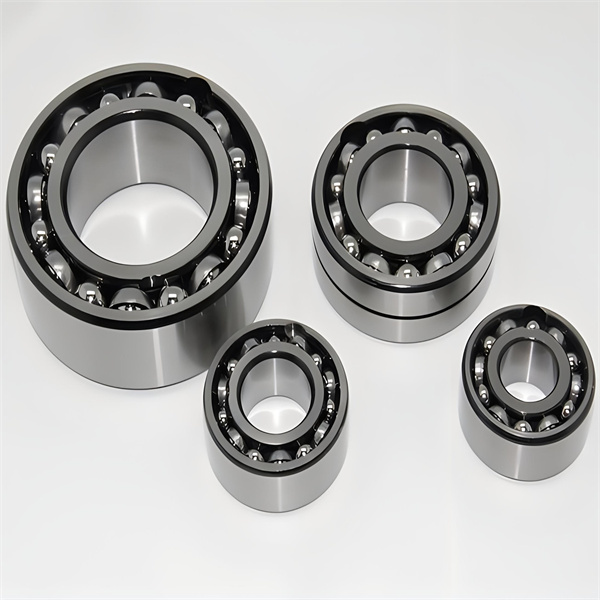
Double Row Angular Contact Ball Bearings
The double row angular contact ball bearing design is two single row angular contact ball bearings arranged back to back. This type of bearing has the same design as a single row angular contact ball bearing, but takes up less axial space. Bearings are non-separable.
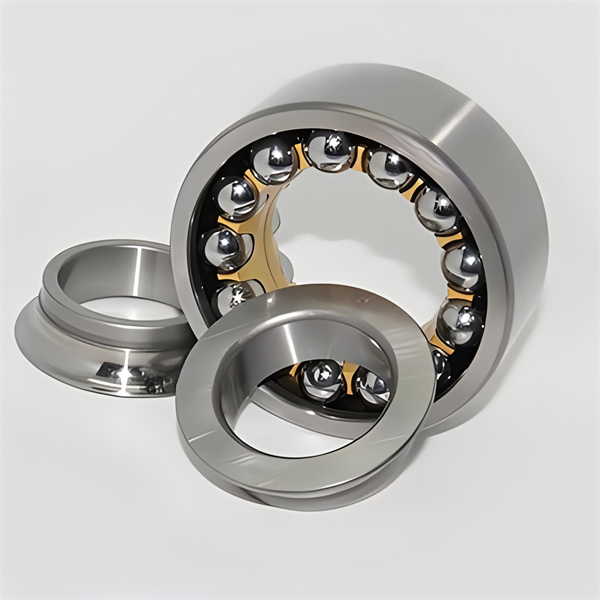
Four Point Contact Ball Bearing QJ type
Four-point contact ball bearings are separable bearings that can withstand bidirectional axial loads. It belongs to radial single row angular contact ball bearing. Compared to double row bearings, the axial space occupied is significantly reduced. The contact angle of SKF four-point contact ball bearings designed by QJ is 35° or 45°. The inner ring is a flat inner ring. This allows more balls to be installed in the bearing, which can give the bearing a higher load-carrying capacity. The rotation speed of the four-point contact ball bearing is very high and the operation is very stable, and its double half-ring can be removed from the whole set of bearings and installed separately, so the four-point contact ball bearing is mainly used in the engine.
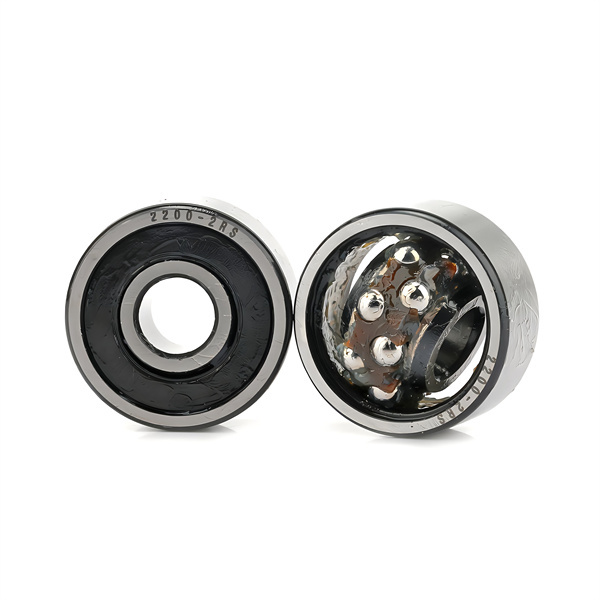
Rubber sealed self-aligning ball bearing
Aligning ball bearing has two kinds of structure, cylindrical hole and conical hole, cage material is steel plate, synthetic resin and so on. Its characteristic is that the outer raceway is spherical, with automatic aligning, which can compensate for the error caused by different heart and shaft deflection, but the relative inclination of the inner and outer rings should not exceed 3 degrees.
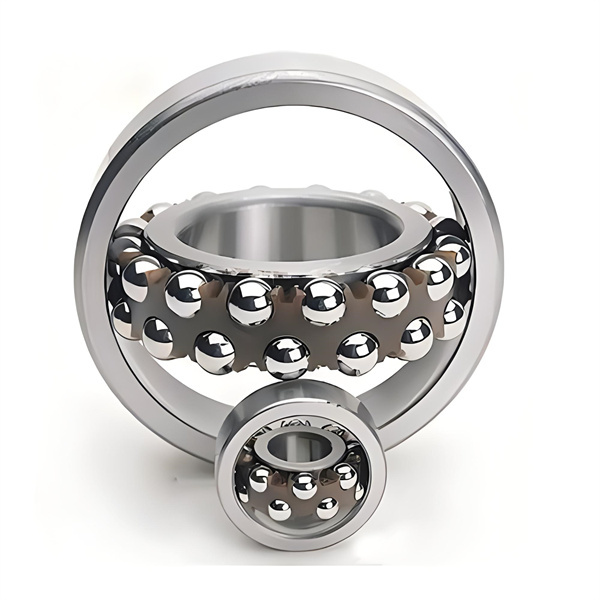
Aligning ball bearing has two kinds of structure, cylindrical hole and conical hole, cage material is steel plate, synthetic resin and so on. Its characteristic is that the outer raceway is spherical, with automatic aligning, which can compensate for the error caused by different heart and shaft deflection, but the relative inclination of the inner and outer rings should not exceed 3 degrees.
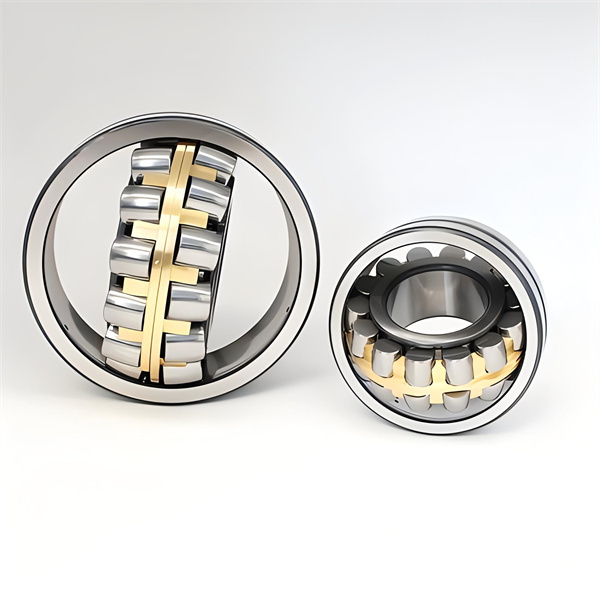
MB type spherical roller bearing
Type MB: Traditional structural improvement design reinforced symmetrical rollers, with two brass alloy cages, and the inner ring has a middle rib. The design load is the same as the CC type, with the characteristics of high rated load and long service life.
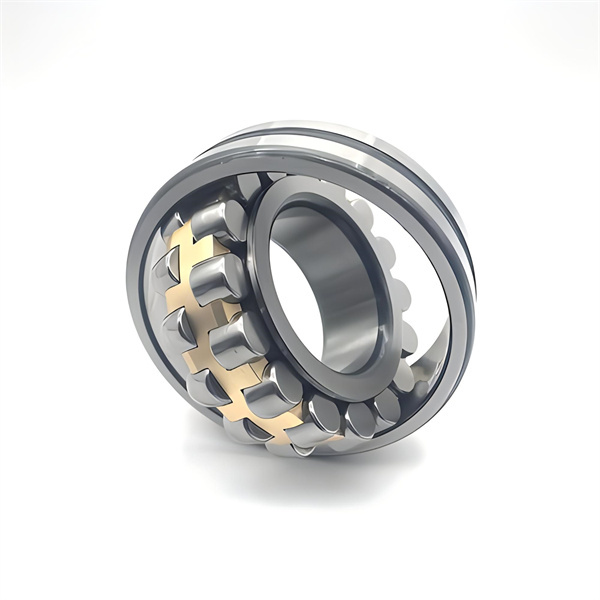
CA type spherical roller bearing
Spherical roller bearings have double row rollers, the outer ring has a shared spherical raceway, and the inner ring has two raceways that are inclined at an angle relative to the bearing axis. Mainly bear radial load, but also can bear axial load in any direction. It has good impact resistance, and generally speaking, the allowable working speed of spherical roller bearings is low. It has the self-aligning performance that other bearings do not have, and the self-aligning performance varies with the bearing size series.
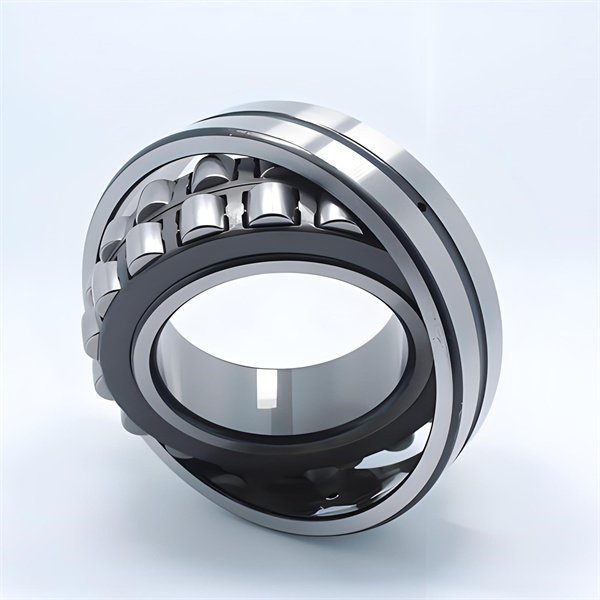
CC type spherical roller bearing
CC structure spherical roller bearings are characterized by the use of steel stamping cages, reinforced symmetrical rolling elements and movable spacers. Generally, it can be used in common with CA structure design.
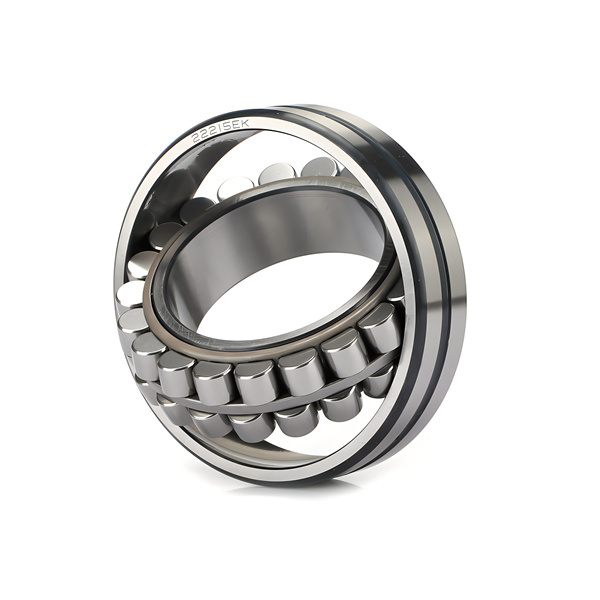
E type spherical roller bearing
The latest international design, it uses symmetrical spherical rollers, two-piece quenched steel stamped cages, the inner ring has no ribs and has a middle retaining ring guided by the cage.
CONTACT US
Address:Room 2-A010, Building 26, Zone 3, Times Headquarters Base, No. 15, Lanxiang Road, Tianqiao District, Jinan City, Shandong Province

PRODUCTS
◆
◆
Copyright © Shandong Aifule Precision Bearing Co., Ltd.